
School Uniform: Affordability, Sustainability and a Second Life

by Sam Dale & Son, Holmes Chapel
The introduction of the Children’s Wellbeing and Schools Bill has prompted many schools to review their uniform policies, with affordability firmly at the heart of the conversation. For families, any changes that help reduce the cost of sending children to school are welcome. However, perhaps the biggest opportunity is to think differently about the lifespan of school uniform itself.
School uniform has long divided opinion. Some see it as an unnecessary expense, while others believe it creates a sense of belonging, removes the pressure to wear expensive fashion brands and helps children focus on learning rather than labels. Whatever your view, most people would agree that no child should be disadvantaged because of the cost of getting dressed for school.
National headlines often suggest that parents spend hundreds of pounds preparing a child for the new school year. While those figures highlight the genuine financial pressures many families face, they often include shoes, trainers, bags, stationery and other back-to-school essentials alongside school uniform. The Government’s recent changes focus on reducing the cost of compulsory branded uniform items, encouraging schools to strike a better balance between affordability, practicality and maintaining their identity.
At Dales, we’ve always believed that affordability isn’t simply about buying the cheapest garment; it’s about getting the greatest value from it. A well-made jumper, blazer or polo shirt that lasts several years and can then be passed on to another family often represents better value than a cheaper item that needs replacing after only a short time.
With that philosophy in mind, Dales introduced a Pre-loved Trade-In Scheme several years ago. Families are encouraged to return good-quality uniform in exchange for credit towards future purchases, allowing those garments to be worn by a second - and often third - local child. It has been encouraging to see more families embracing pre-loved uniform, not as a compromise, but as a practical way to reduce both household costs and waste.
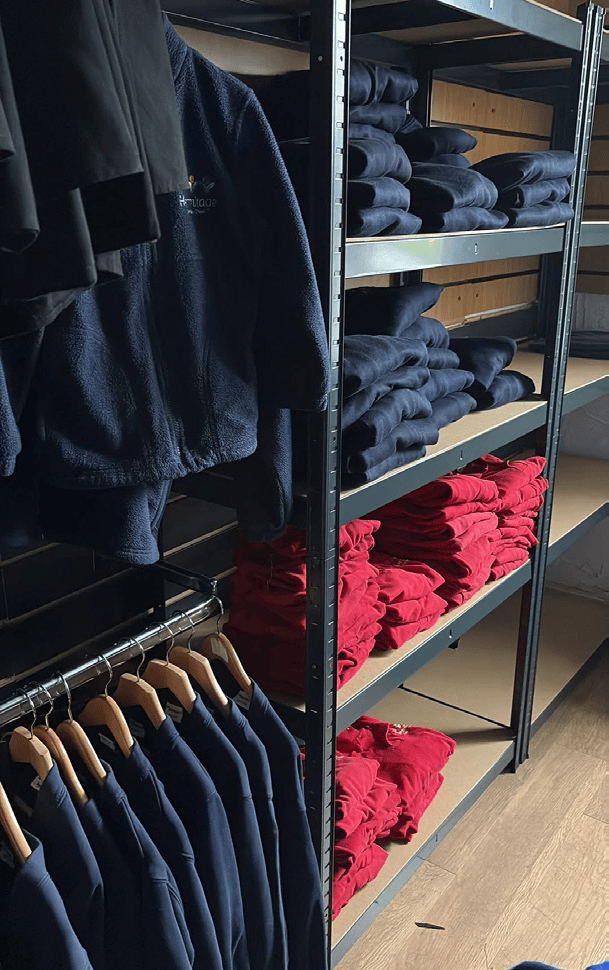
The environmental benefits are just as important. According to WRAP, around 711,000 tonnes of used textiles are discarded in the UK every year, with a significant proportion ending up in residual waste. School uniform presents an additional challenge because embroidered logos, sewn-on badges and blended fabrics can make garments more difficult to recycle through conventional textile recycling routes. Reusing those garments within the local community is often the most sustainable option.
Across the country, schools, PTAs, charities and independent retailers are finding new ways to keep good-quality uniform in circulation. Whether through swap shops, donation schemes or trade-in programmes, these initiatives demonstrate that affordability and sustainability can work hand in hand.
Here in Holmes Chapel, we’ve seen first-hand what can be achieved when a community chooses to reuse rather than replace. Every item of uniform that stays in circulation helps a family manage the cost of school, keeps perfectly wearable clothing out of the waste stream and reduces the need for new garments to be manufactured.
If the recent changes to school uniform policy encourage more communities to think this way, they will have achieved something that benefits not only family budgets, but future generations too.
All information correct as of August 2026.
Sources
UK Government - Children’s Wellbeing and Schools Bill and school uniform guidance.
WRAP - Textiles Market Situation Report (2024).
The Children’s Society - The Cost of the School Day research.


Comments